
MUSIC OF THE PLANTS IS NOW PLANT MUSIC
Plants live, react, and communicate. For centuries we couldn’t hear it, until now. Plant Music makes the invisible audible, transforming plants’ natural bioelectrical activity into living sound.
In 2015, at the ISSSEEM Research Symposium, Helgeson presented a study showing how the music generated by the Music of the Plants – U1 device could influence human physiological parameters, including blood composition, immune system, and stress levels.
In collaboration with Prof. Ernst Zürcher and Prof. Marc Henry (Université de Strasbourg), Jean Thoby conducted pioneering research documented in his book, enriched by hundreds of testimonials.
Using the Music of the Plants U1 device and the method of genodics, together with the Genodics laboratory, a correlation was observed between plant-generated music during a sound bath session and proteins linked to specific pathologies. These studies may open revolutionary perspectives in the field of scientific research.
Plants possess a complex intelligence and an electrical sensitivity that science has only begun to unveil. Humans have always drawn well-being from their healing power, indeed, many modern medicines are inspired by plant-derived molecules. Combined with the scientific validation of music therapy, the encounter between the force of nature and the harmony of sounds in Plant Music opens new perspectives for balance, regeneration, and holistic well-being.
The potential of Plant Music to promote well-being is based on two principles that have already been widely studied: forest medicine and the beneficial effects of music.
Born in Japan in the 1980s, it is a wellness practice based on mindful immersion in nature.
In several countries it is already scientifically recognized: numerous studies show positive effects on the immune system, stress reduction, and psychophysical balance.
In some nations, doctors prescribe walks in specific forests as an integral part of therapy.
A discipline that uses sound, rhythm, and melody for therapeutic and rehabilitative purposes. It promotes relaxation, emotional well-being, and cognitive and communicative stimulation.
It is scientifically validated: numerous studies demonstrate its effectiveness in reducing anxiety, depression, chronic pain, and in supporting patients with neurological disorders such as Alzheimer’s, Parkinson’s, and autism.
Academic research in recent decades has opened new perspectives on the plant world:

Biologist Monica Gagliano showed that Mimosa pudica can learn and remember. After repeated, non-harmful drops, it stops closing its leaves, a behavior comparable to habituation learning.

Stefano Mancuso describes plants as intelligent networks, without a central brain yet able to perceive stimuli, adapt, and communicate with one another and with other organisms (fungi, microbes).

Jack Schultz and Ian Baldwin (1980s): while studying poplars and maples, they observed that when a plant was attacked by insects, it released volatile organic compounds (VOCs) into the air. Neighboring plants, upon receiving these chemical signals, increased their defenses (for example, by producing more tannins or substances toxic to insects). This mechanism has been confirmed in many species (tomatoes, corn, tobacco), and to date as many as 1,700 compounds/“words” have been identified, forming the extraordinary vocabulary of plants.

Experiments conducted by Suzanne Simard (University of British Columbia) have shown that plants, through underground fungal networks or mycorrhizae (the so-called Wood Wide Web), exchange nutrients and chemical signals. A well-known example: a Douglas fir can transfer carbon and defense signals to nearby young seedlings via mycorrhizae.

When a leaf is damaged, the plant sends true electrical and hydraulic signals traveling through its tissues (Vodeneev et al., 2006; 2015; Fromm & Lautner, 2007). These impulses regulate vital processes such as photosynthesis or stomatal closure and, in case of herbivore attack, activate defense genes and the production of protective substances, making the entire plant more resistant (Zimmermann et al., 2016).
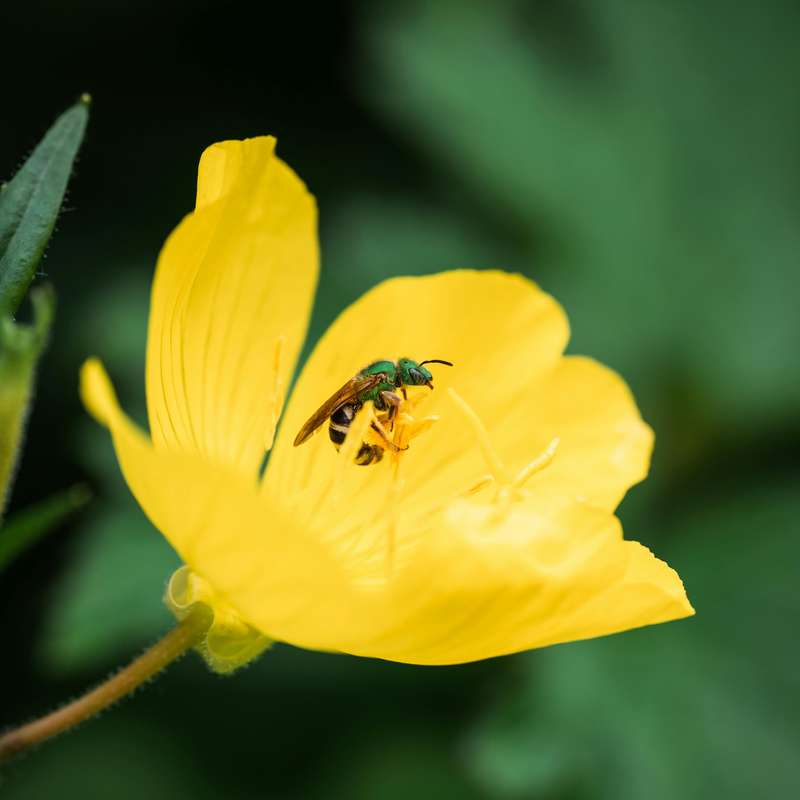
Research from Tel Aviv University (Veits et al., Cell, 2019) revealed that the flowers of Oenothera drummondii respond to sounds in their environment. When they perceive the buzzing of bees, their petals vibrate at the same sound frequencies and, within minutes, the plant increases the sugar concentration in its nectar. This behavior shows that plants not only communicate but also “feel” the vibrations of the world around them, responding intelligently and immediately to the sounds of life.
We chose music because it’s the most direct and universal language, a way for everyone to understand the message of plants.
An algorithm transforms the electrical signals detected from leaves and roots into sounds. The musical phrases reflect the plant’s condition (moisture, nutrients, light, health) and are also influenced by the environment, presence, and even the attitude of people around it.
Each species has its own “electro-musical signature,” recognizable from the very first melody. Over time, each plant develops a unique profile that can become increasingly complex through progressive learning
The information provided on this website is for informational purposes only. Statements regarding the potential benefits of plant music are not intended to diagnose, treat, cure, or prevent any disease. Plant music and its related products are not medical devices and should not be used as a substitute for medical consultation, diagnosis, or professional treatment. Always consult your physician or another qualified healthcare provider regarding any questions you may have about a medical condition or your health.
Receive DISCOUNT CODES, useful information and extraordinary experiences joining our newsletter.